New dating of the Taung child reveals complex human evolutionary history
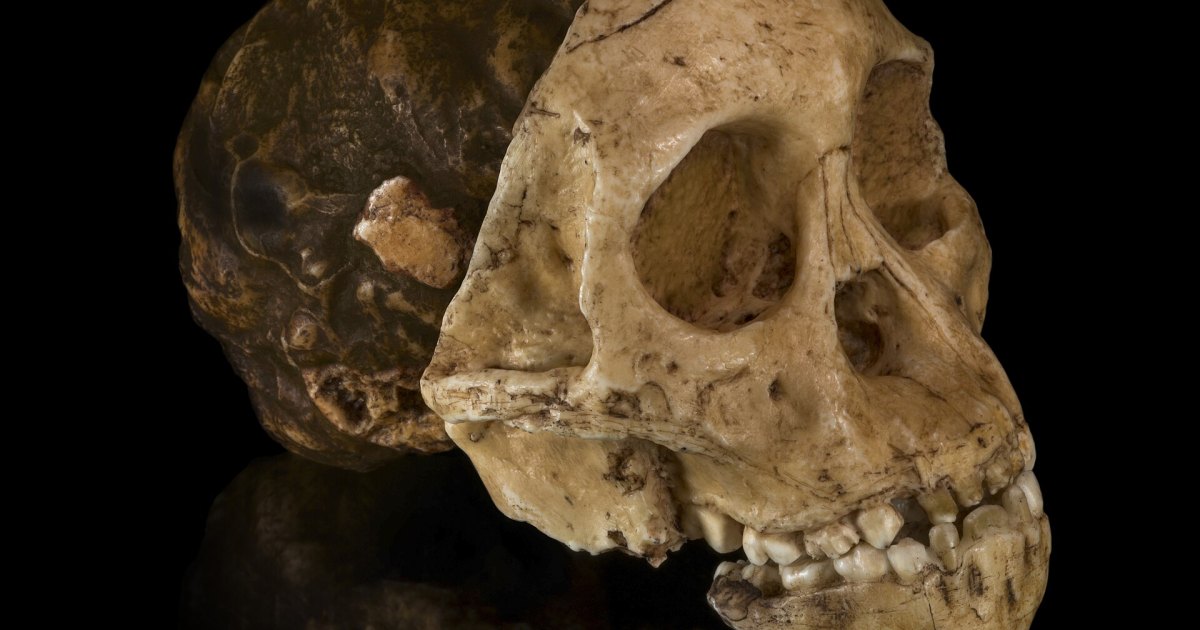
The scientific community has long looked to the Taung Child as a pivotal specimen in the study of early hominids. By establishing a more precise chronological framework for this discovery, researchers are now better equipped to understand the developmental timeline of our distant ancestors. This updated dating suggests that the specimen lived roughly 3 million years ago, a finding that carries significant weight for those mapping the progression of early life forms.
Re-evaluating early hominid chronology
The process of dating ancient fossils involves sophisticated techniques that allow experts to place specific remains within a broader geological and biological context. By refining the age estimate of the Taung Child to the 3-million-year mark, scientists have opened a new window into the environmental and evolutionary pressures that shaped early hominid populations. This adjustment is not merely a numerical shift; it forces a reconsideration of how different species may have interacted or diverged during this critical epoch in the fossil record.
Implications for the evolutionary tree
The human family tree has often been depicted as a linear progression, but evidence from specimens like the Taung Child suggests a much more tangled and complex reality. The revised timeline indicates that the diversity of early hominids was likely greater than previously assumed. By situating this fossil within a 3-million-year-old context, researchers can better compare it with other contemporaneous findings, helping to clarify the branching patterns that eventually led to the emergence of later human ancestors. This complexity underscores the necessity of viewing early evolutionary history as a web of interconnected lineages rather than a simple, singular path.
Future directions in fossil research
As analytical methods continue to advance, the ability to date fossils with greater accuracy becomes increasingly vital. The re-dating of the Taung Child serves as a reminder that our understanding of the past is subject to change as new data emerges and existing techniques are refined. This discovery encourages a broader investigation into the fossil sites associated with this era, potentially leading to the identification of further specimens that could fill existing gaps in the historical record. By integrating these findings, the scientific community moves closer to a comprehensive model of how early hominids navigated their world and evolved over millions of years. The ongoing study of such iconic fossils remains essential for piecing together the long and intricate story of our biological heritage.