BepiColombo spacecraft enters orbit around Mercury
Add Lettid as a preferred source on GoogleSee more of our stories in your Google results Jordan Brooks
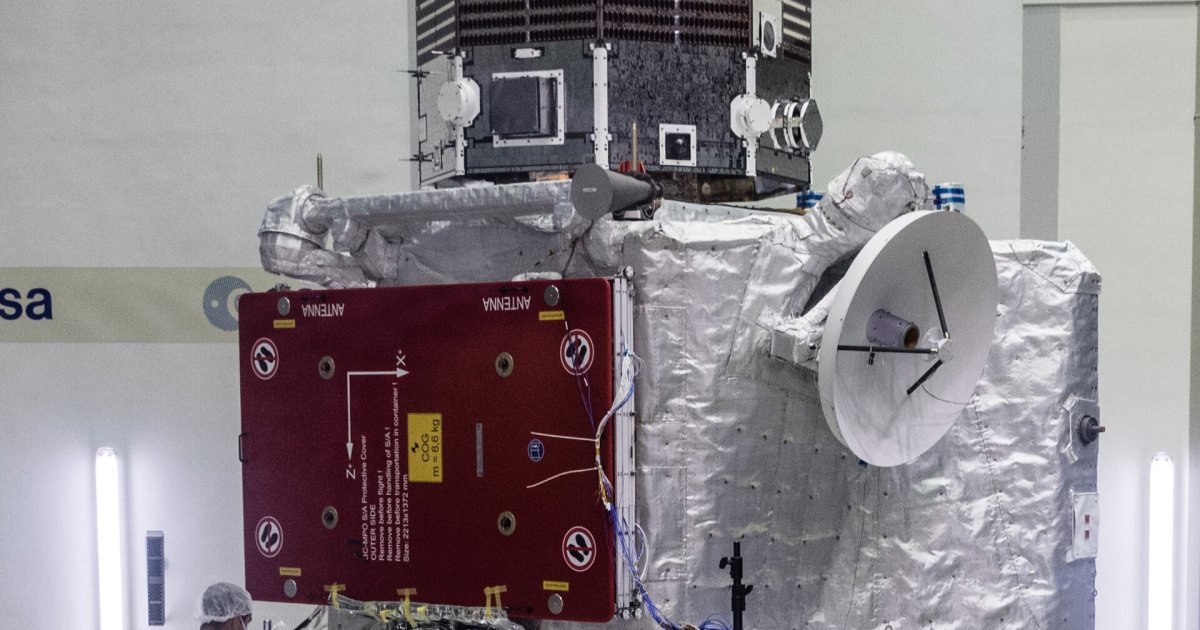
The BepiColombo spacecraft, a joint project between the European Space Agency (ESA) and the Japan Aerospace Exploration Agency (JAXA), successfully entered orbit around Mercury on 21 November. This arrival concludes an eight-year transit that began with the mission’s launch in October 2018. The craft is now the second mission in history to achieve orbit around the planet, following the success of the NASA MESSENGER probe, which operated there between 2011 and 2015.
Orbital separation and scientific objectives
The spacecraft currently consists of two distinct scientific probes that will operate from different altitudes. On 9 December, the JAXA-built probe, known as MIO, will separate from the main assembly to enter an elliptical orbit ranging from 500 km to 11,000 km above the surface. Its primary objective is to sample Mercury’s magnetic field and observe how it reacts to solar wind.
Following the separation of MIO, the ESA-built Mercury Planetary Orbiter (MPO) will continue to adjust its trajectory. It is scheduled to descend gradually until March 2027, at which point it will reach its final operational orbit between 400 km and 1,500 km. From this position, the MPO will conduct long-term studies of the planet’s surface composition.
Mission technology and transit challenges
During the long transit to the inner Solar System, mission scientists utilized the journey to calibrate and test onboard instrumentation. Among the equipment is the Mercury Imaging X-ray Spectrometer (MIXS), which was pointed at the Crab Nebula to capture data. According to Emma Bunce, a plasma physicist at the University of Leicester, MIXS represents the first X-ray imaging device ever deployed on an interplanetary mission.
The duration of the mission is attributed to the extreme energy requirements of reaching the innermost region of the Solar System. To arrive at its destination without overshooting the planet, the spacecraft had to execute a series of maneuvers to lower its altitude toward the Sun while carefully managing its velocity. This complex approach was necessary because, in terms of orbital mechanics, reaching Mercury requires more energy than traveling to the outer reaches of the Solar System.
Key mission milestones
October 2018: The BepiColombo spacecraft launched, beginning its multi-year journey toward the Sun.
21 November 2026: ESA confirmed that the module successfully inserted itself into Mercury’s orbit.
9 December 2026: The MIO probe will separate from the MPO to begin its independent study of the magnetic field.
March 2027: The MPO is scheduled to reach its final, lower-altitude orbit to commence continuous surface observations.