SpaceX Starship completes orbital flight and lands safely
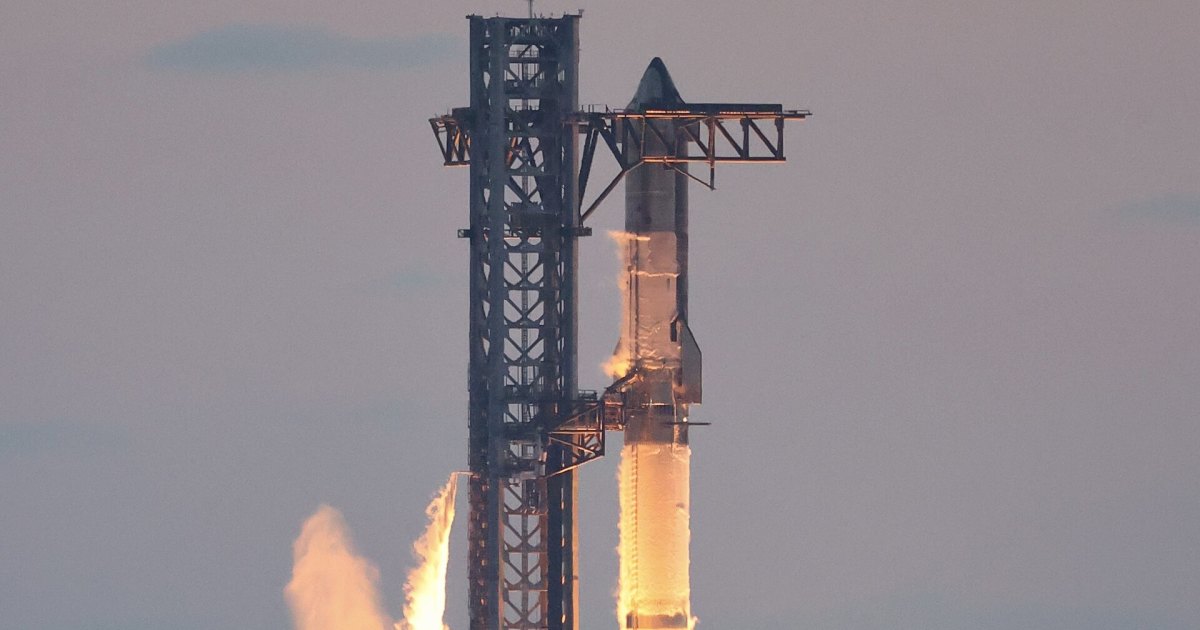
The aerospace industry reached a significant milestone as the SpaceX Starship vehicle successfully completed a flight from orbit and returned to its landing pad. This achievement marks a critical step forward in the ongoing development of large-scale, reusable space transportation systems designed for future missions. By executing a controlled descent and landing, the flight test provided essential data regarding the vehicle’s maneuverability and structural integrity during the transition from orbital velocity to surface touchdown.
Advancements in reusable launch technology
The primary objective of this test was to validate the operational feasibility of recovering massive orbital vehicles. Reusability remains a central pillar of modern aerospace engineering, as it aims to reduce the financial and logistical barriers associated with space exploration. The successful return of the Starship to the launch site confirms that the hardware can withstand the extreme thermal and mechanical stresses encountered during atmospheric reentry. Engineers monitored the vehicle’s performance throughout the flight, focusing on the precision required to align the craft with the landing pad after traveling at high speeds through space.
Implications for future orbital missions
This successful demonstration serves as a foundational proof of concept for future operations involving the Starship platform. The ability to return to a landing pad rather than splashing down in the ocean significantly simplifies the recovery process and allows for faster turnaround times between flights. As the development program continues, the data gathered from this orbital return will inform necessary refinements to the vehicle’s guidance, navigation, and control systems. The mission highlights the ongoing transition toward a more sustainable model of space flight, where hardware is designed to be utilized repeatedly rather than discarded after a single use.
Next steps in the testing program
Following this successful landing, the development team will conduct a comprehensive analysis of the vehicle’s condition to assess the impact of the flight on its various components. This review process is standard practice for evaluating the durability of materials and systems under real-world conditions. Future test flights are expected to build upon the successes of this mission, potentially expanding the scope of orbital maneuvers and testing more complex flight profiles. The progress demonstrated by this event reinforces the trajectory of current aerospace initiatives aimed at increasing the frequency and reliability of launches, ultimately supporting broader goals for long-duration space travel and the deployment of large-scale payloads into orbit. The successful return to the pad remains a key indicator of the platform’s readiness for more ambitious operational phases in the coming years.