SpaceX successfully executes first Starship booster capture
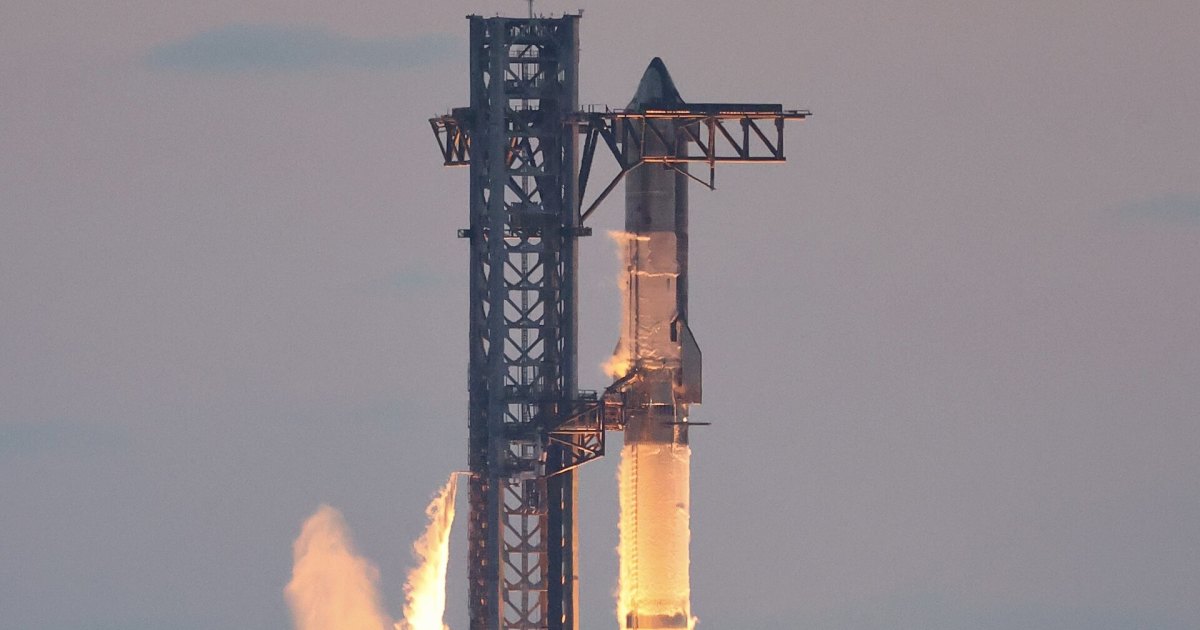
The aerospace industry witnessed a major technological advancement as SpaceX completed the inaugural capture of a Starship booster. This event marks a pivotal moment in the development of reusable launch vehicles, demonstrating the capability to recover massive hardware components mid-flight after they have completed their primary mission objectives.
The launch sequence
The operation began with a high-energy ascent, characterized by a fiery start that tested the structural integrity and propulsion systems of the vehicle. As the booster separated from the upper stage, it initiated a controlled descent back toward the launch site. Engineers monitored the telemetry as the vehicle navigated the complex atmospheric re-entry phase, ensuring that the trajectory remained aligned with the designated recovery zone. The precision required for this maneuver highlights the sophisticated guidance and control systems integrated into the modern launch architecture.
Engineering the recovery
The capture process involved intricate coordination between the descending booster and the ground-based infrastructure. By successfully intercepting the vehicle, the team demonstrated a repeatable method for hardware retrieval. This capability is essential for reducing the costs associated with space exploration, as it allows for the refurbishment and reuse of critical components rather than discarding them after a single flight. The successful execution of this capture confirms that the mechanical systems designed for this specific task are functional under real-world conditions.
Future implications for spaceflight
This achievement serves as a foundation for future missions that rely on rapid turnaround times and increased flight frequency. By proving that a booster can be safely captured and secured, the path is cleared for more ambitious testing cycles. The data gathered from this flight will be instrumental in refining the recovery process, potentially leading to even greater efficiency in upcoming launch campaigns. As the program progresses, the focus will likely shift toward scaling these operations to support more complex orbital and deep-space objectives, ensuring that the hardware remains reliable throughout its operational lifespan.
The successful capture represents a culmination of extensive development and testing efforts. By overcoming the challenges of high-speed descent and precise positioning, the mission has validated key design choices. Moving forward, the focus will remain on analyzing the performance metrics of the booster to ensure that the recovery process can be sustained across multiple future flights. This milestone not only enhances the technical capabilities of the current fleet but also sets a new standard for how heavy-lift vehicles are managed during the return phase of their journey.