Euclid mission data release spans more than 900 million galaxies
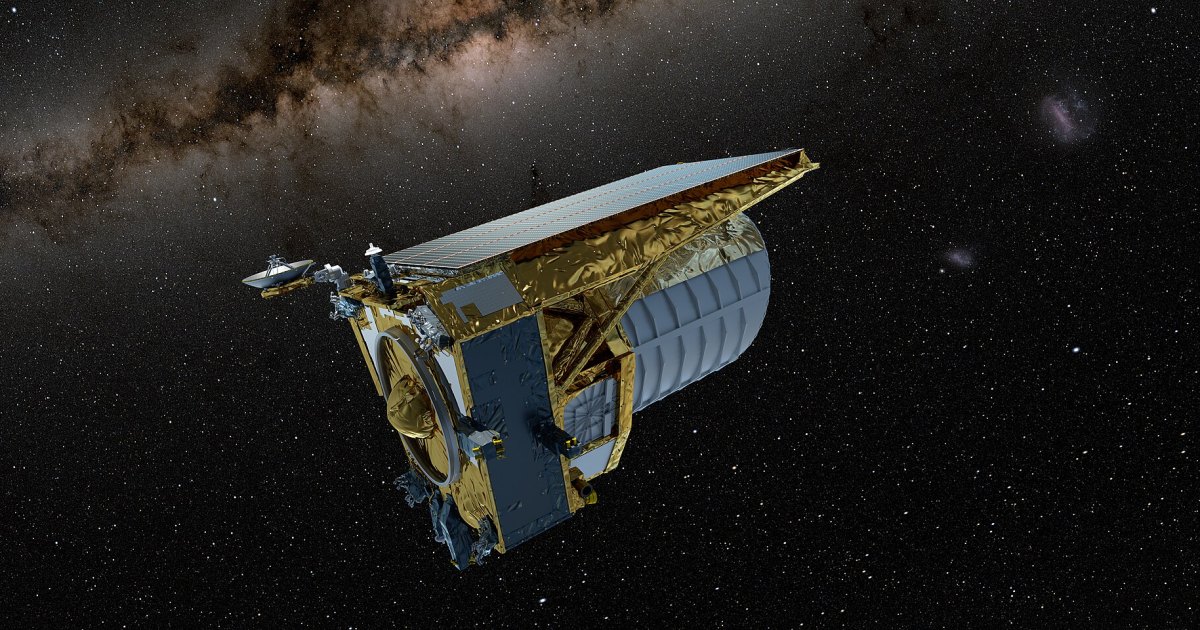
The scientific community has reached a significant milestone in space exploration with the latest data dissemination from the Euclid mission. This expansive collection of information provides researchers with a vast repository of observations, effectively mapping a substantial portion of the observable universe. By capturing detailed data on more than 900 million galaxies, the mission continues to advance the collective understanding of celestial structures and the underlying mechanisms that govern the distribution of matter across the vastness of space.
Expanding the cosmic map
The sheer scale of this data release represents a major achievement for modern astronomy. By aggregating observations of nearly a billion galaxies, the mission enables scientists to construct a more comprehensive view of the cosmic web. This intricate network of filaments and voids serves as the framework for the universe, and the new data provides the necessary resolution to study these features with greater precision than previously possible. Researchers are now equipped to analyze the spatial arrangement of these galaxies, which is essential for investigating the evolution of the universe over billions of years.
Advancing astrophysical research
The information made available through this release is expected to drive numerous studies across various fields of astrophysics. By providing a deep and wide-field survey of the sky, the mission allows for the examination of galaxy formation, the role of dark matter, and the expansion history of the universe. The breadth of the data ensures that scientists can perform statistical analyses on a scale that was previously unattainable, potentially uncovering subtle patterns in how galaxies cluster and interact. This depth of information is vital for testing current cosmological models and refining theories regarding the fundamental properties of space.
Future implications for space exploration
As the scientific community begins to process and interpret this massive influx of data, the long-term impact on the field of astronomy becomes increasingly clear. The mission’s ability to survey such a large number of galaxies provides a foundation for future inquiries into the nature of the cosmos. By establishing a robust dataset, the project not only addresses immediate scientific questions but also sets the stage for upcoming missions and observational campaigns. The ongoing analysis of these 900 million galaxies will likely remain a central focus for astronomers for years to come, as they work to piece together the history and future trajectory of the universe. This collective effort highlights the importance of large-scale observational missions in expanding the horizons of human knowledge regarding the celestial environment.